

By Caitlyn Turner
Renee Nicole Good is shot and killed in Minneapolis, Minn. by an ICE agent. The first question asked by most is, what did she do to incite this violence against her? Violence against women in Sudan and Congo has gotten so intense that news sites have lost count of the death toll; all conservative news sites can talk about is how Christians are persecuted in those places. When something innately wrong is done to a woman, there is often an instinct to victim-blame and ignore the way the offenders give excuses for their actions. While this is often the case, we can change this mindset by asking ourselves what can we do to help prevent violence like this from the start?
Though misogyny and femicide are extremely layered issues that cannot be solved by small, simple actions of separate people, there are ways we can come together to address them. The best way to begin to chip away at these problems is to look inward. When we see a news story about a woman or group of women being hurt, instead of blaming them or redirecting focus to unrelated issues, we can do more research on the topic, stay focused on the issues and pay our respects to the women and their families. Then we can ask ourselves important questions like, how can we hold whoever committed the violence accountable for his or her actions? We can also ask, how does this relate to feminist interests and what are some ways we can help prevent these actions in the future?
One of the most important problems that women, especially women of color, face is the way that crimes of violence against them lack news coverage. The tragedies women of color experience are often overlooked due to a lack of focus on them by the media and the minimization of their suffering. Even though women of color experience disproportionately high violence compared to white women, we barely see news about events like the femicide in Sudan and Congo and the ongoing domestic violence crisis in the Middle East, Central Africa and, in America, underprivileged communities.
One of the most important ways we can be allies to minority groups is to stay informed and use our privilege to help others who do not have the same opportunities. As a young white woman, I understand the privilege I have and how lucky I was to grow up seeing women who looked like me in a plethora of separate media. But as I have grown older, I realize that women of color are often treated very unfairly in the media and in our general culture. As a result of my research about racism, specifically towards women of color, I’ve learned that while they do not need white women to speak for them, it is so crucial to the advancement of feminism to speak up for all women, regardless of race. Feminism means equality for all women.
After gaining awareness, I would like to bring a call to action to anyone reading this. The next time you hear someone make a racist joke or say something you know is morally, politically and factually incorrect, educate them from your own experiences and research about social justice issues. I know it is easier said than done, but the best way to prevent (or at least decrease) violence against women is through education. With so much access to information in this day and age, one’s ignorance can no longer be an excuse for unjust behavior. While we cannot necessarily force people to be better, we can educate, prioritize awareness and lead by example. So– get out there and DO SOMETHING!
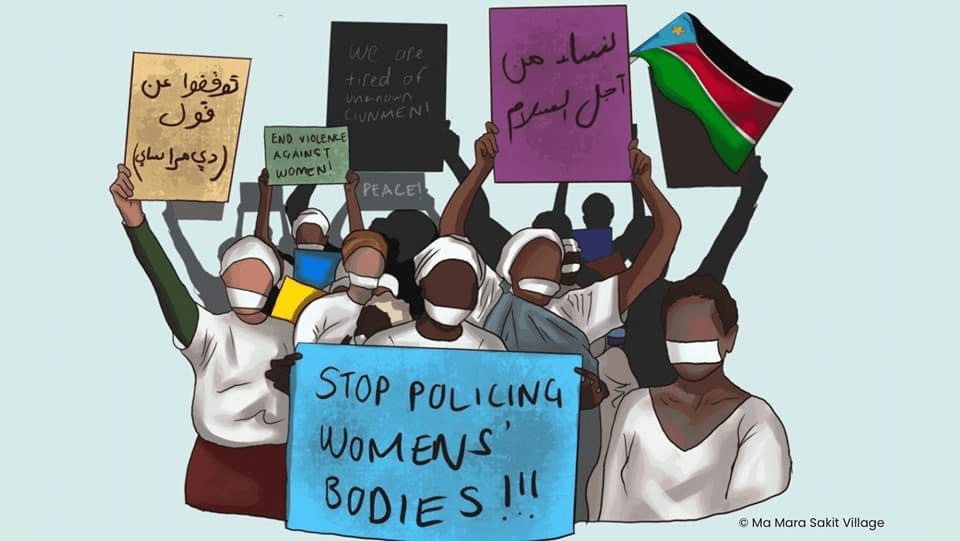
Courtesy of African Arguments
 The Senator Newspaper